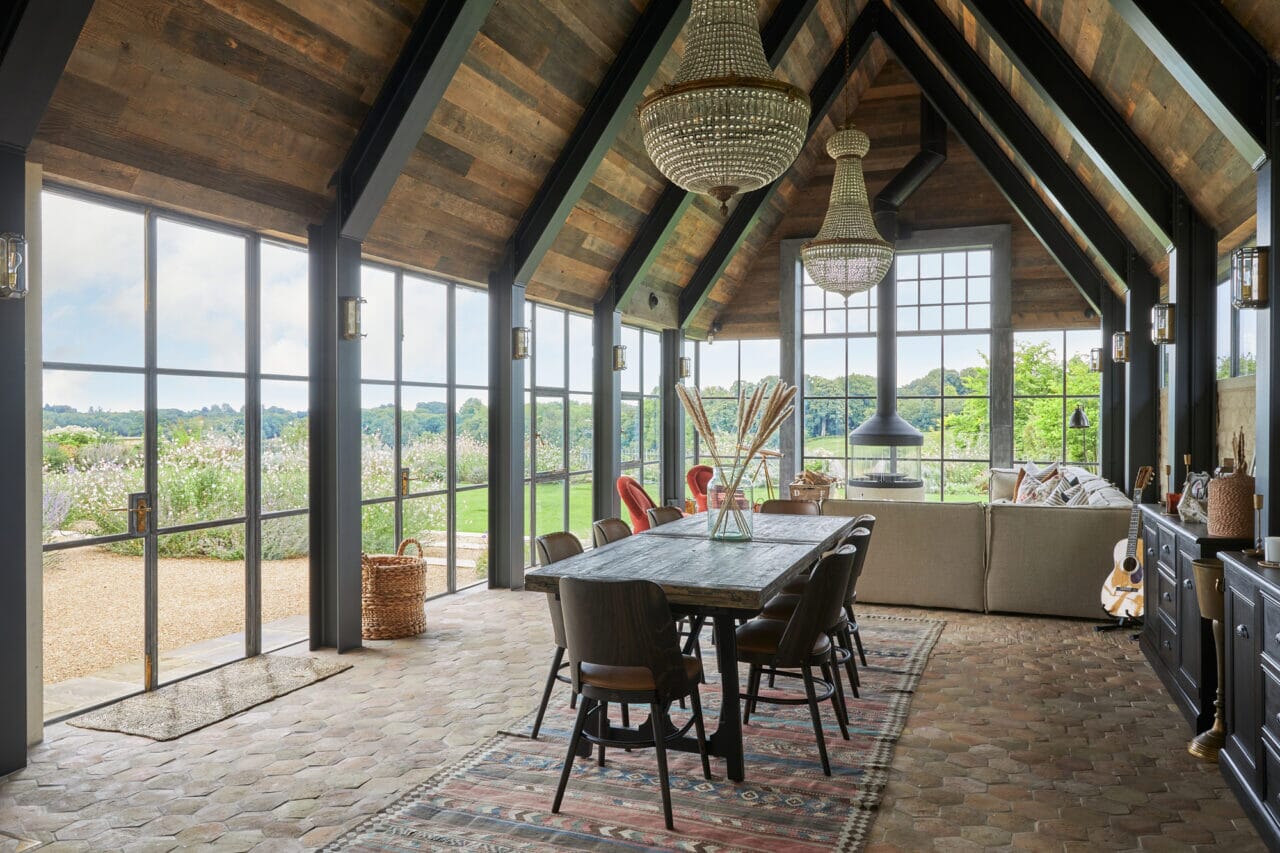
In Conversation with… Stephen Fletcher, Stephen Fletcher Architects

In our latest In Conversation With feature, we speak with London-based architect Stephen Fletcher about the evolving role of glazing in residential architecture, and how carefully specified systems can shape both design intent and performance.
Here, Stephen reflects on a career spanning a wide range of architectural styles, and discusses how systems such as Sky-Frame enable precise, minimal interventions that respond to both context and client ambition.
Designing with intent in contemporary glazing
For Stephen Fletcher, residential architecture has never been about a singular style. Since establishing his practice in London, his work has spanned everything from minimalist homes to Georgian townhouses and Cotswold farmhouses, each project demanding a different architectural response.
What ties this breadth of work together is a consistent principle: choosing the right solution for the context. Nowhere is this more evident than in his approach to glazing.
“Products have become more sophisticated over time,” he explains. “It’s about using what’s appropriate for the place.”
A shift in attitudes to glazing
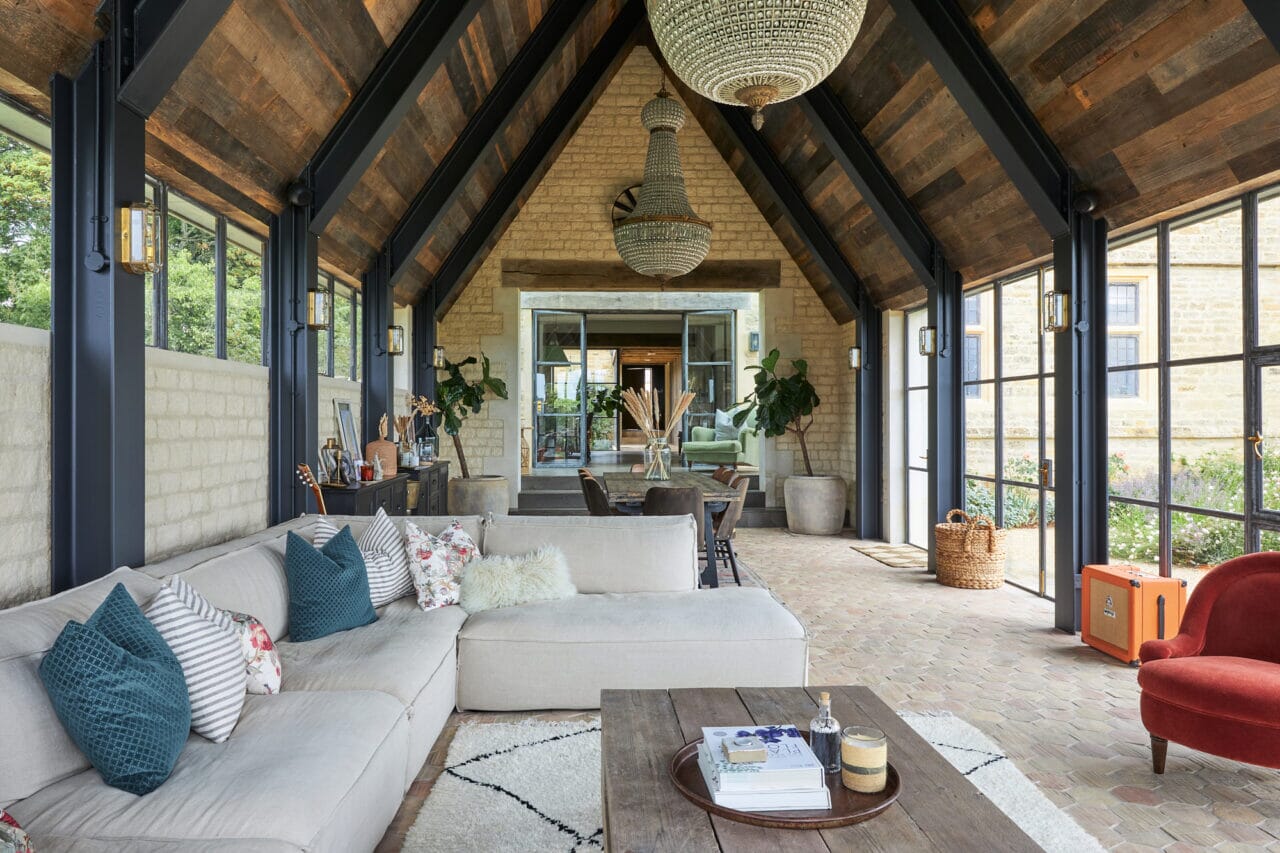
Over the past two decades, Stephen has seen a clear change in both client expectations and planning attitudes, particularly in traditionally conservative areas like The Cotswolds.
“In the past, it was quite rare for someone to commission a modern extension in areas like The Cotswolds,” he says. “But that’s changed. Clients are much more comfortable with contemporary architecture, and planners are more open to it as well.”
This shift has been driven in part by greater public awareness of architecture and design – ‘thanks to TV shows like Grand Designs’ – alongside a growing appreciation for how glazing can transform a space, maximising light, framing views, and creating a sense of openness.
A corner that disappears
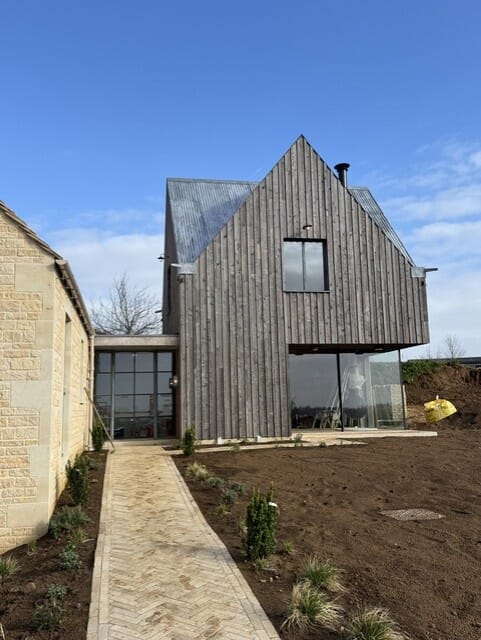
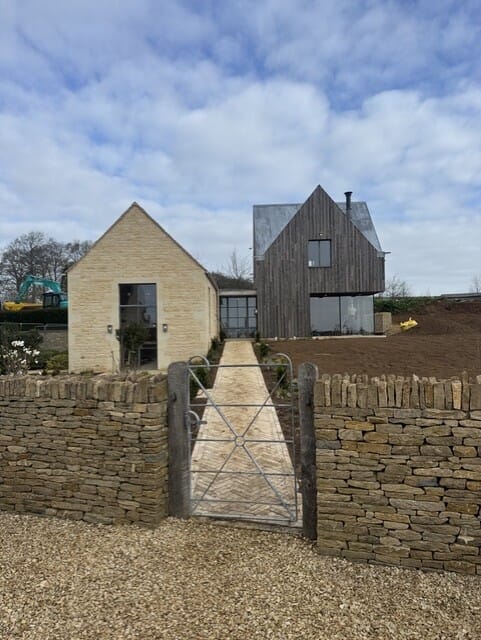
This approach is clearly demonstrated in an ambitious residential project that Stephen undertook in the North Cotswolds that explores the relationship between traditional forms and contemporary detailing.
The building includes a contemporary take on the traditional Cotswold dovecote form, clad in vertical timber boarding, and, with a precise architectural intervention: a corner of the structure is cut away entirely to create an impressive glazed opening.
“The idea was to keep the structure very simple and cut out the corner as cleanly and sharply as possible,” Stephen explains.
This move creates a striking spatial effect. The double-height living area opens onto a panoramic landscape, with a mezzanine above and a recessed terrace beyond. A suspended log burner hangs within the opening, anchoring the space while reinforcing the sense of openness.
“It’s a spectacular view,” he says. “The glazing allows you to experience it fully.”
To achieve this level of clarity, Stephen specified a Sky-Frame sliding corner system – one of the few solutions capable of delivering a truly frameless opening at this scale.
“It was the appropriate product for that project in that situation,” he notes. “With Sky-Frame, it almost doesn’t look like a window at all, so you’re more aware of the view beyond.”
The design uses a combination of sliding and fixed panels to maintain minimal sightlines, while ensuring performance is not compromised.
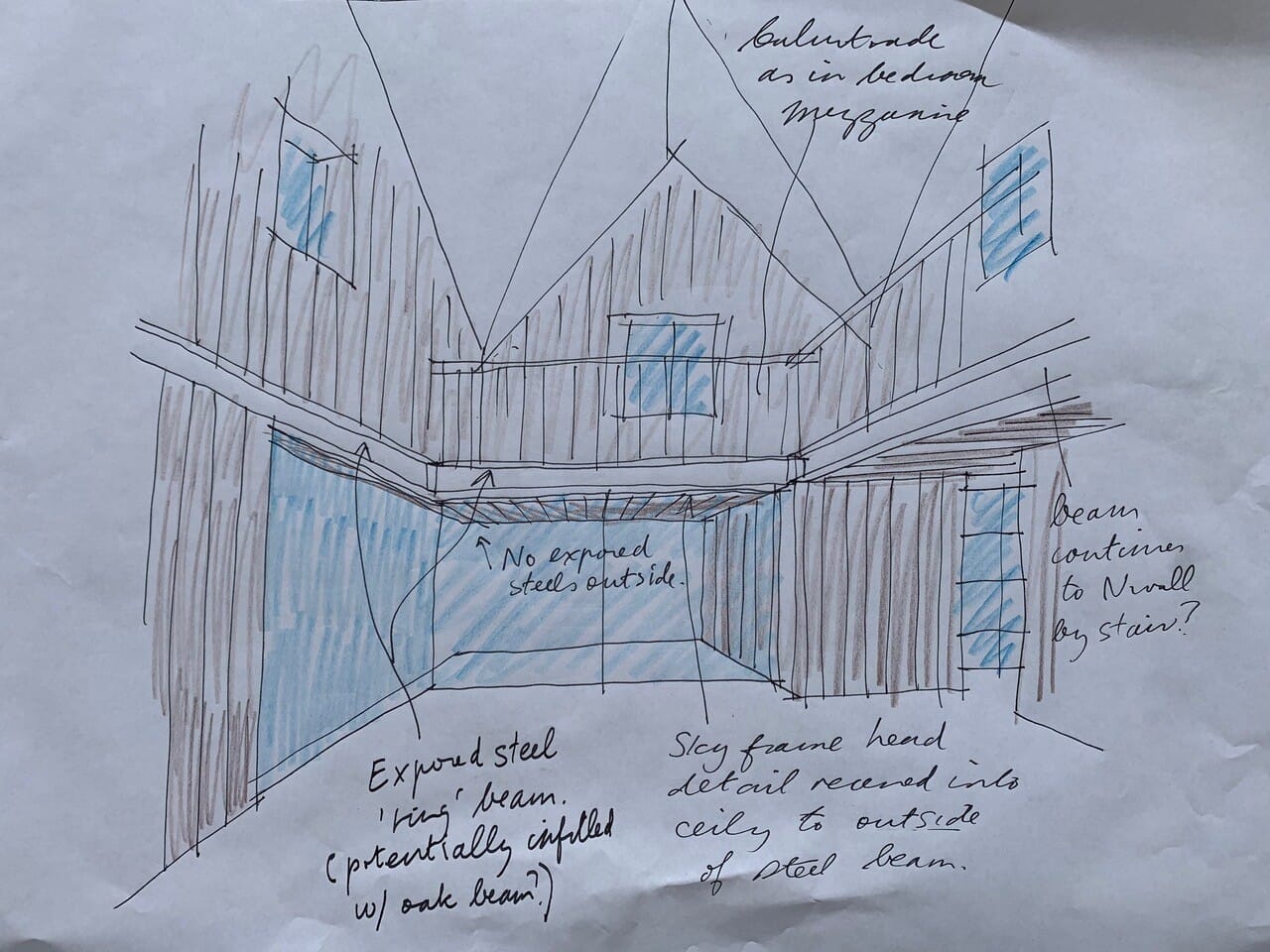
Crucially, the glazing system is integral to the architectural concept. Removing the corner required significant structural coordination, with concealed steelwork carrying the load above.
“Just cutting out that corner had a big impact on the structural design,” Stephen explains. “It’s not a simple move.”
Technical collaboration and detail
Delivering this level of precision required close collaboration throughout the design and construction process.
Working with Ultraview, Stephen and the wider project team developed detailed drawings from an early stage, refining dimensions and performance criteria as the project progressed.
“It’s a complicated building – there are a lot of things to think through,” he says. “With systems like this, everything has to be millimetre perfect and Ultraview were involved from the start, providing detailed information, and then checking measurements on site and updating drawings as needed.”
Beyond geometry, technical performance played a key role. Thermal efficiency, drainage and tolerances all had to be carefully coordinated to meet building regulations without compromising the design intent.
“Ultraview helped us understand about the U-values and which feeds which building regulations,” he continues. “This gave us a new level of detail about the thermal efficiency of the product.”
Want to find the ideal glazing system for your next project?
We specialise in high-performance glazing systems that bring value to both residential and commercial projects. To help you find the appropriate system for your design, please get in touch with us.