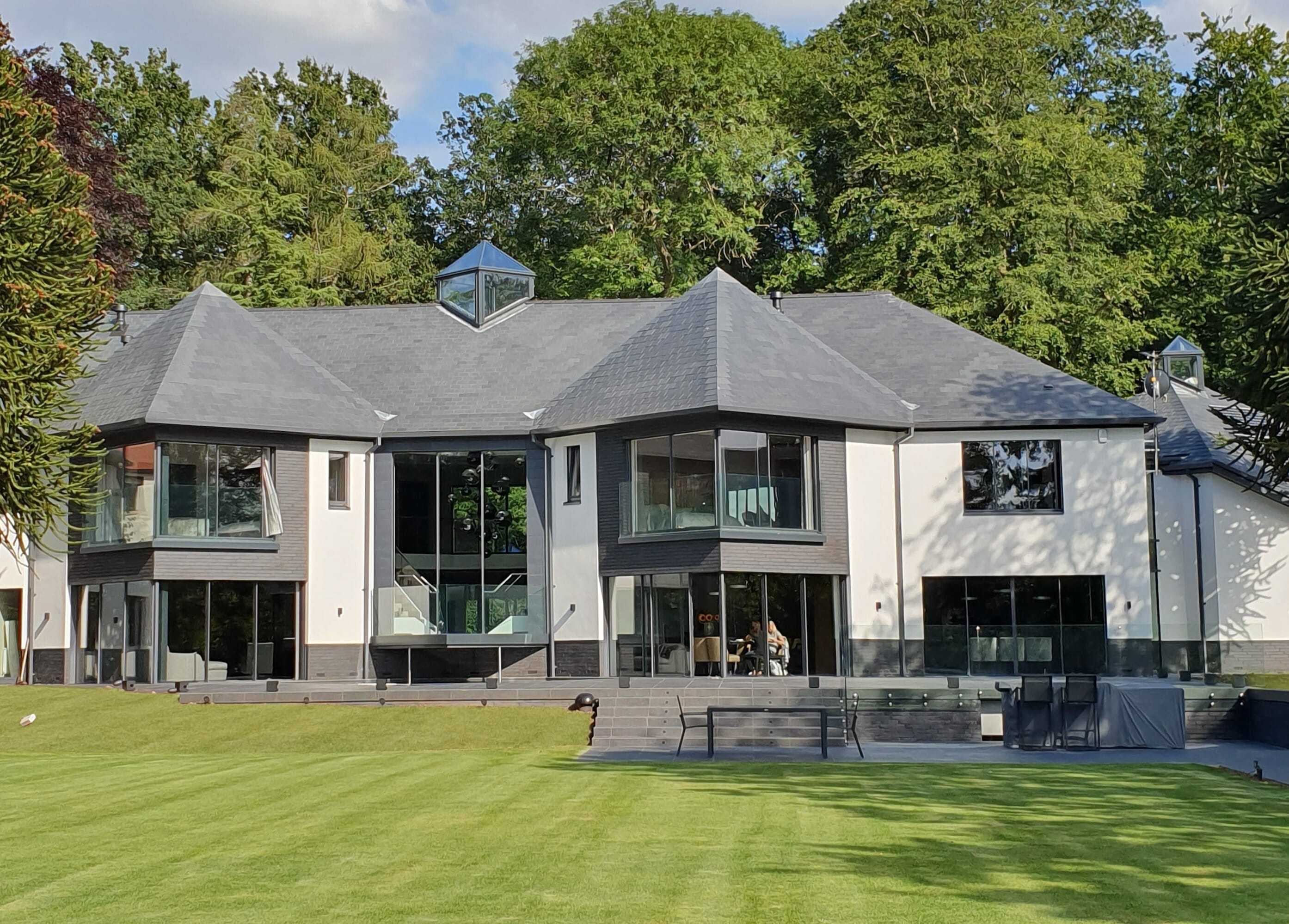
In Conversation with… Simon Marson, MRT Architects

In our continuing series, Cotswold Windows speaks with leading architects across the Cotswolds to explore how glazing design shapes contemporary architecture – and how collaboration between architect and glazing specialist transforms ideas into reality.
Here, we speak to Simon Marson of MRT Architects who explains the impact products like Sky-Frame have had on large-scale glazing design and the exciting new possibilities it has opened up to architects and designers.
The evolution of large-scale glazing
For many architects, ideas are shaped not just by education, but by exposure – to different cultures, construction methods and ways of thinking about buildings. For Simon Marson, founder of MRT Architects, time spent working in the United States played a formative role in shaping a design philosophy that continues to influence his work today, particularly his approach to light, transparency and large-scale glazing.
As MRT celebrates its 30th anniversary this year, Simon reflects on how international experience, evolving technology and close collaboration with specialist suppliers such as Cotswold Windows have helped make once-ambitious glazing concepts both achievable and practical in the UK.
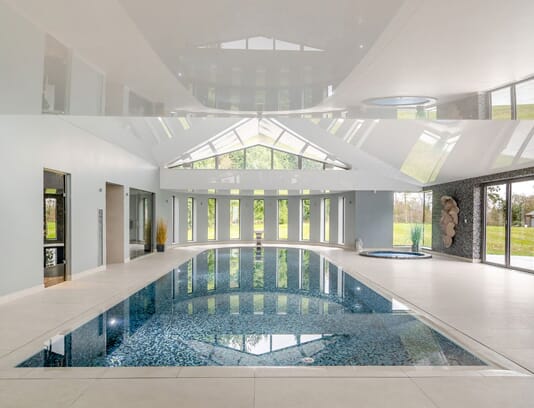
From San Francisco to the UK: learning what’s possible with large-scale glazing
After qualifying at the Welsh School of Architecture, Simon moved to San Francisco, where he was exposed to a very different construction culture at an early age. Here, he experienced architectural trends in the US before they made their way to this side of the pond, working on flagship buildings with lots of glass in landscaped business parks.
“It taught me that anything is possible,” he says. “Even though I was in the USA early in my career, that mindset stayed with me when I came back to the UK.”
On his return to the UK, Simon brought with him those lessons in working on major buildings and the importance of light and openness.
High-end residential architecture and the move towards Sky-Frame
Founded 30 years ago, MRT Architects specialises primarily in high-end residential work. It was through this work that Simon began working with Cotswold Windows and, in particular, the Sky-Frame system.
“I realised they could give us quite a specialised product in Sky-Frame, and, once we introduced it to clients, they just fell in love with it,” he says.
When the frame disappears: why architects choose Sky-Frame
What sets Sky-Frame apart, in Simon’s view, is not simply scale, but the detail.
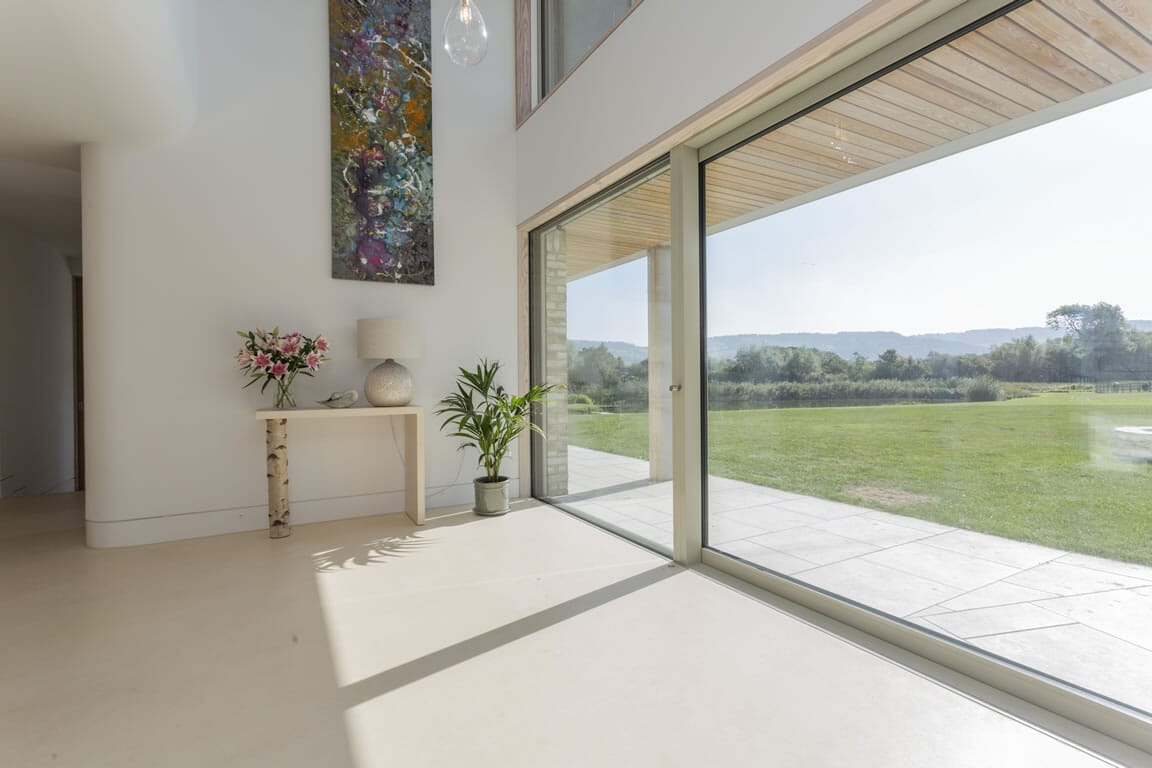
“The capability of the product is remarkable – it allows the frame to disappear into the wall so that the only interface between you and the outside is glass.”
For architects, this opens up opportunities that were previously constrained by frame sizes, mullions and structural interruptions. Large single panes, expertly installed, allow views to remain uninterrupted and spaces to feel calm and expansive.
Level thresholds and inside-outside living with frameless glazing
While ‘inside-outside living’ may now be a familiar phrase, Simon believes the principle remains fundamental:
“That connection with nature and the environment is incredibly important. And having a sophisticated product that lets you open up the fresh air into the room is something we, as architects, find very attractive.”
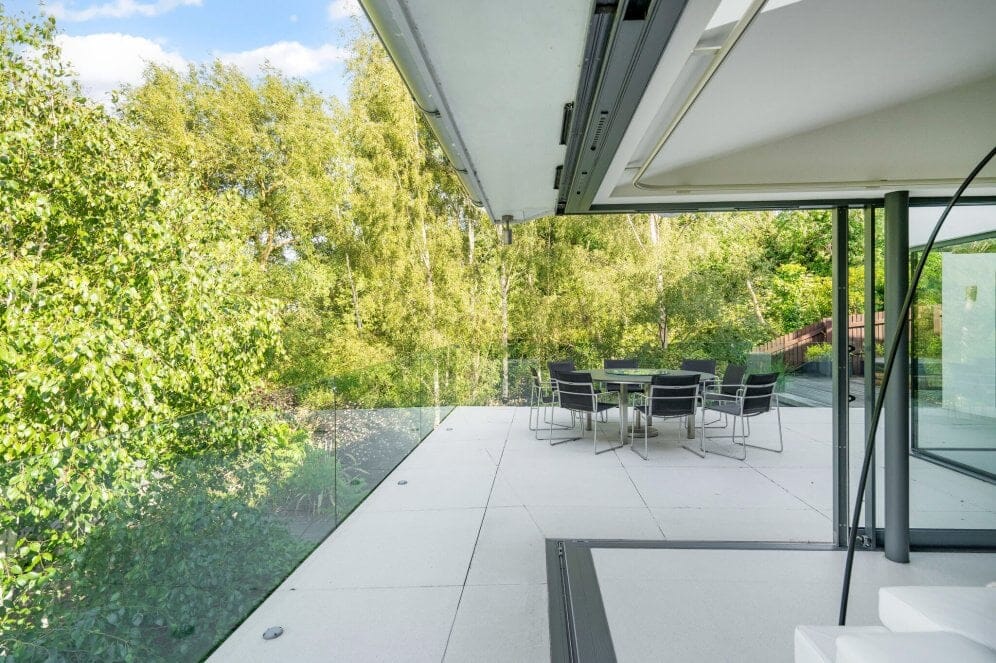
Sky-Frame takes this concept even further with the design of the level threshold. Traditionally there has always been a step up into a home but by dropping the frame into the ground, Sky-Frame has removed that obstacle.
“There is a genuine sense of continuity,” marvels Simon. “You almost don’t know whether you’re inside or outside – it’s a beautiful thing.”
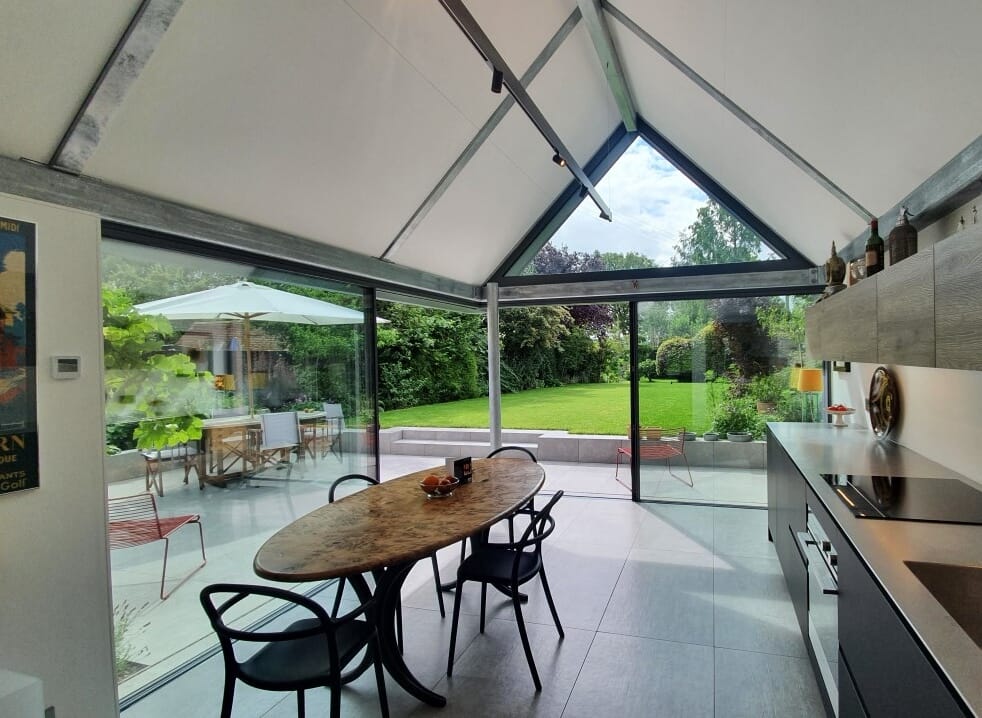
Using contemporary glazing in listed and historic buildings
Much of MRT’s work takes place within listed and historic buildings, particularly Grade II properties across the Cotswolds. Here, the role of glazing becomes more nuanced.
“Conservation officers are often keen to avoid creating a pastiche of the original building. You don’t want a poor copy of the original. Glass is a modern material that makes that distinction very clear – that’s why you see so many glass box extensions.”
Used well, large-scale glazing provides transparency – allowing the historic fabric to remain visible and clearly distinguished from new interventions. For more about using glass in historic properties, take a look at our blog, A Guide to Glazing Applications in Listed Buildings.
Balancing glass, thermal performance and liveability
Although the Sky-Frame concept is now more widely adopted in the UK, Simon does not see it as a solution to be used everywhere and always takes a considered approach:
“As architects, we need to be confident it’s the right solution – just because you can do it doesn’t mean you always should. It’s more about location within the house.”
On an aesthetic level, that means balancing using glazing to frame specific views, dissolve the barrier between the home and the garden or connect old and new parts of a building. But on a practical level it means creating more enclosed, cosy spaces within a home to offset the heat loss from large-scale glazing.
Insulation is a key requirement in building design and it’s important to understand how glazing can impact U-values and SAP calculations – you can discover more about how this is calculated in our blog, Know your Numbers: a Guide to Calculating U-Values in Windows.
Designing with natural light at the centre of the brief
For MRT, every brief begins with the light, tracing the morning dawn through to the evening dusk.
“It’s an absolutely critical part of the design process,” says Simon. “We always ask how rooms can be positioned to maximise it.”
Simon is a strong advocate for natural light as a contributor to wellbeing. It is here that Sky-Frame becomes, in his words, an example of ‘the art of the possible’ – enabling architects to design around light without being constrained by conventional glazing limitations.
Looking ahead – innovation supported by expertise
With glazing technology continuing to evolve, Simon is enthusiastic about what the future holds.
“Curved glass, angled glass, cantilevered corner doors – these are things I’m desperate to try. We know Sky-Frame can do them; it’s about finding the right opportunity.”
What excites him most is not just the availability of these solutions, but the confidence that they can be delivered properly when the right expertise is involved. For Simon, this is where collaboration with specialists such as Cotswold Windows becomes essential.
“Architects need to understand what’s possible, but also how it actually works in reality,” he says. “I’ll develop the concept, and then I’ll ask Cotswold Windows, ‘How do we make this work?’”
This usually involves taking clients to the Cotswold Windows showroom in Toddington where the team will clearly explain the systems and the best options for that design.
As Sky-Frame continues to introduce new and increasingly ambitious solutions, having a knowledgeable partner who understands the technical, structural and performance implications is key to turning innovation into buildable architecture.
Discuss Your Sky-Frame or large-scale glazing project
From early-stage concepts to technical detailing and installation, Cotswold Windows works closely with architects and homeowners to deliver Sky-Frame and high-performance glazing systems with confidence. Visit our Toddington showroom or speak to our specialist team to explore what’s possible.
