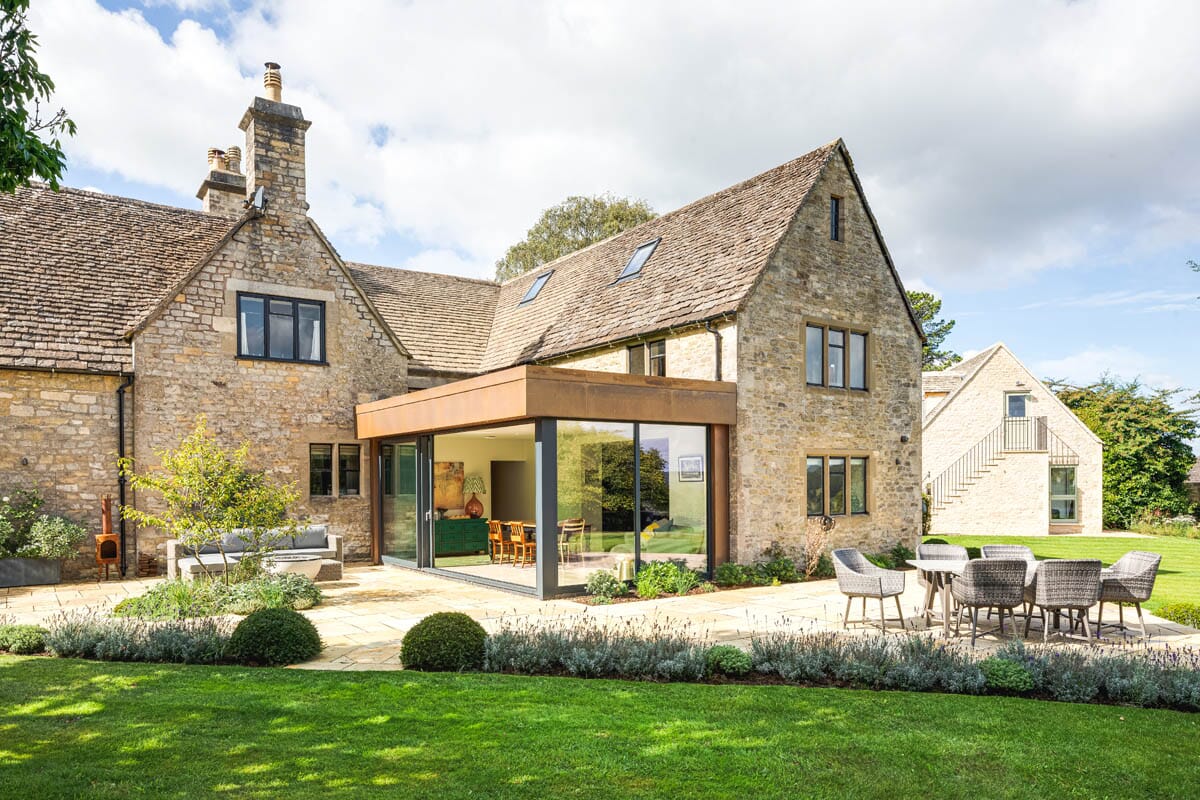
A Guide to Specifying Glass Box Extensions
Glass box extensions are one of the most technically demanding forms of structural glazing. While they appear simple – minimal, transparent and often frameless – the reality is a highly engineered solution where structure, performance and detailing must be resolved from the outset.
They are widely used in both contemporary and heritage settings because they provide a clear distinction between old and new. Rather than competing with the existing building, a glass box allows it to remain visible, creating a controlled and deliberate architectural contrast.
However, achieving this level of clarity requires careful specification. Every element – from load paths to drainage – must be considered early. This guide outlines the key technical principles.
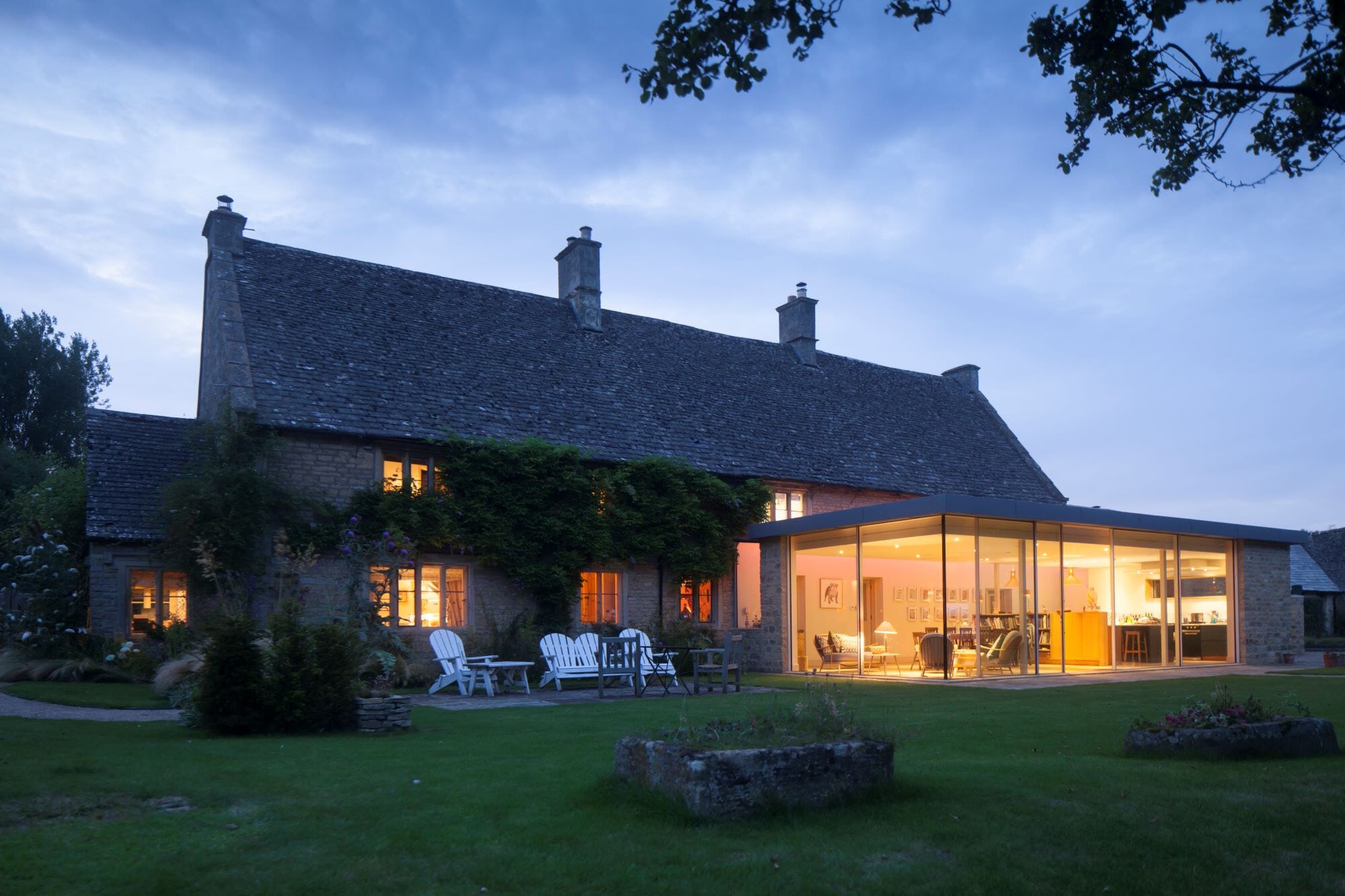
Structural glass and load bearing considerations
Structural glass is not simply an infill material in a glass box extension – it forms part of the load-bearing system.
Crucially, there is no off-the-shelf system for structural glazing at this level so each project is bespoke. Instead, the framework is built up from individual profiles – typically custom aluminium combined with concealed steel sections – designed specifically for the project and often recessed into the building fabric to maintain a minimal visual line.
Load paths must be resolved early. Where uninterrupted openings are required, laminated glass beams (or glass purlins) are used within the roof to transfer loads without introducing visible supports. This has a direct impact on glass specification, with significantly thicker build-ups than standard glazing – typically around 12mm for vertical panels and 17.5mm or more for roof elements, depending on span and loading.
Where glass panels meet, they are typically joined using structural silicone, allowing the glass to act as a continuous surface while maintaining strength and weather resistance.
In some cases, systems such as Sky-Frame and MHB can be introduced as complementary elements within a wider glazing scheme, but the structural glass itself remains a fully bespoke solution.
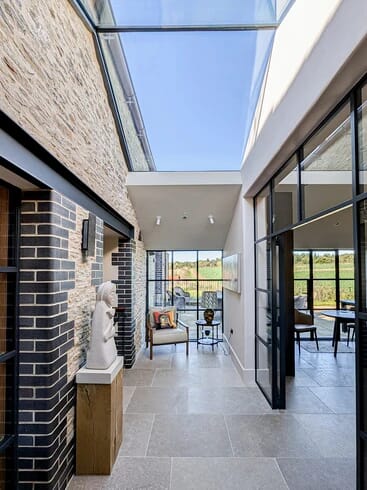
Roof glazing integration
Roof design is one of the most technically demanding aspects of a glass box extension. While the aesthetic goal may be a flat, invisible plane, in practice, the roof must always incorporate a subtle pitch – typically a minimum of 3 degrees.
This is essential for effective water management. Without adequate fall, rainwater, debris and dust will accumulate on the surface, compromising both performance and appearance over time.
The structural strategy of the roof will vary depending on its intended use. For example:
- A non-access roof may rely on simpler support conditions.
- A roof designed for maintenance access or occasional loading requires enhanced structural performance.
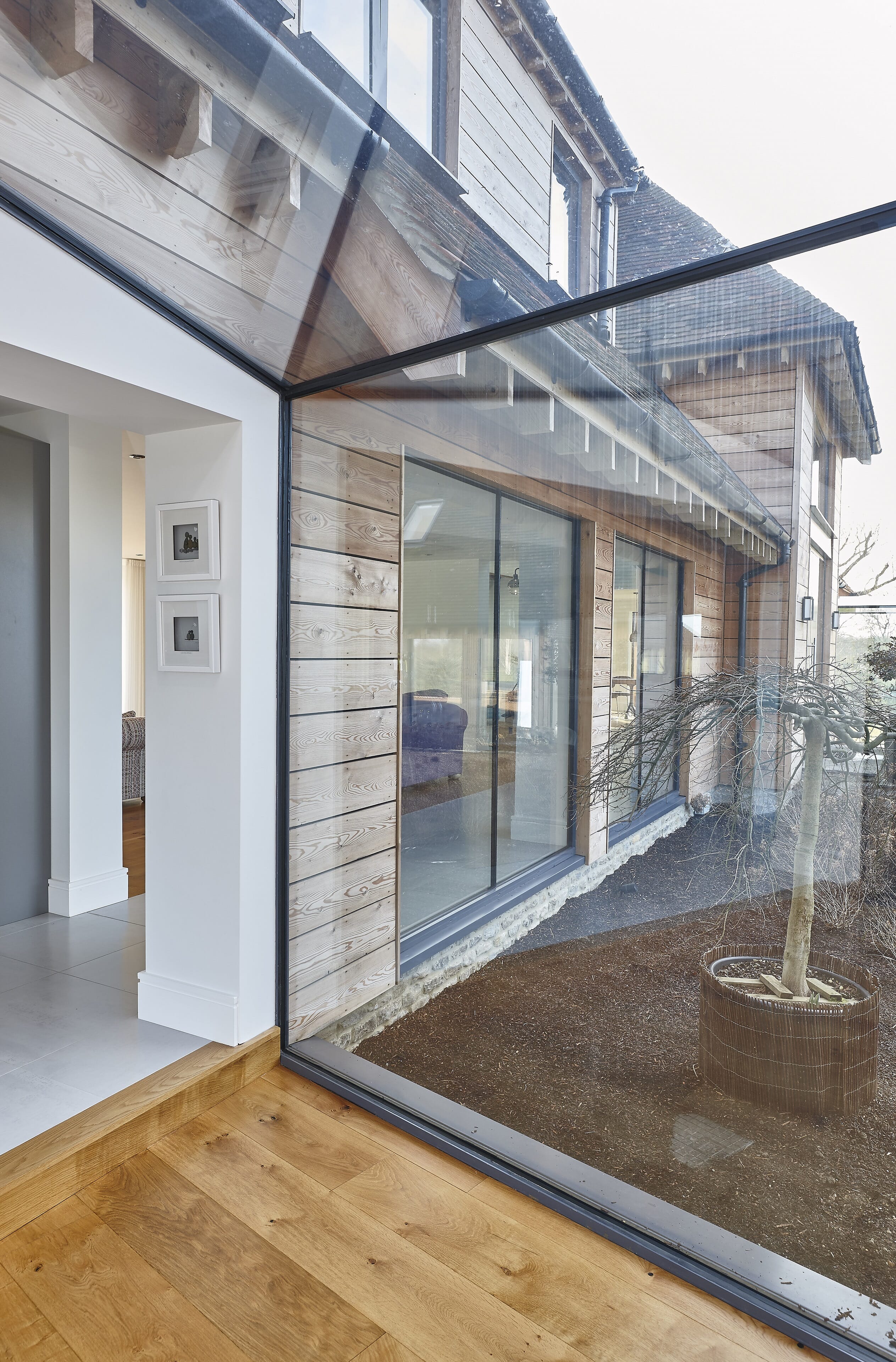
Thermal bridging prevention
Thermal performance must be addressed from the outset, particularly at junctions between the glass structure and the building.
Perimeter channels – where the glass is fixed back to the building – play a critical role. These are typically formed from bespoke profiles or channels that both structurally support the glass and provide thermal separation between inside and outside.
Getting this detail right is essential. Poorly designed perimeter channels can compromise thermal performance, create condensation risks and affect long-term durability.
Glass specification also plays a role. Decisions around double or triple glazing must balance thermal performance with weight, span and detailing constraints, alongside compliance with regulations such as Part O and energy performance requirements.
Early modelling of U-values and junction performance is essential to ensure compliance. For more on how to calculate the numbers, take a look at our blog, Know Your Numbers: A Guide to Calculating U-Values in Windows.
Planning constraints
Glass box extensions are often supported in sensitive or listed contexts because of their visual neutrality.
Their transparency allows the existing structure to remain visible, something architect Simon Marson from MRT Architects commented on in a recent In Conversation With article: “Conservation officers are often keen to avoid creating a pastiche of the original building. You don’t want a poor copy of the original. Glass is a modern material that makes that distinction very clear – that’s why you see so many glass box extensions.”
However, planning approval depends on careful control of scale, proportion and detailing. Poorly resolved schemes can undermine the clarity that makes this approach effective. Close coordination between architect, glazing specialist and planning consultant is essential.
For more on this, see our blog: A Guide to Glazing Applications in Listed Buildings.
Precision installation
Installation is a critical stage in delivering a glass box extension. Large-format structural glass is heavy and requires specialist handling. Panels must be installed using mechanical lifting equipment and experienced teams, often working within tight tolerances.
This is not comparable to standard window installation. Errors can result in significant cost, delays or safety risks. Experienced installers will coordinate closely with crane operators and site teams to ensure safe handling and accurate placement to ensure optimum performance.
How to specify a glass box extension: a checklist
Glass box extensions are defined by a small number of critical decisions. Getting these right early in the design process will determine whether the scheme is feasible, buildable and compliant.
- Understanding scale and layout: Most glass boxes are formed from three sides – typically two walls and a roof. The overall size and proportions will dictate glass thickness, structural strategy and feasibility.
- Weathering and roof pitch: A minimum fall (typically around 3°) is required to ensure water drains correctly and does not pool on the roof.
- Glass specification: The choice between double and triple glazing depends on thermal performance targets, structural constraints and overall weight. Low iron should be specified as standard glass introduces a green tint which becomes more visible as thickness increases.
- Structural support strategy: This includes how loads are transferred – whether through laminated glass beams, concealed steelwork or a hybrid approach.
- Connection and perimeter detailing: Junctions between glass, structure and the existing building must accommodate movement, weathering and structural loads while remaining visually discreet.
Because these systems are bespoke, late-stage changes are often difficult and expensive. Early coordination between architect, structural engineer and glazing specialist is essential.
A specialist approach
Glass box extensions must achieve three things: they must be structurally sound, perform well over time, and meet the architectural intent.
Achieving all three relies on early coordination between design, engineering and installation. At Cotswold Windows, we take responsibility for the full glazing package – from early design input and technical detailing through to manufacture and installation. This ensures that what is designed can be delivered on site without compromise.
For architects and homeowners, early engagement with a specialist reduces risk, improves buildability and helps resolve key decisions before they become constraints.
For expert advice and support specifying your glass box extension, contact us.
FAQs: Glass box extensions
What is a glass box extension?
A glass box extension is a structural glazing solution where glass forms part of the load-bearing envelope, typically used to create a minimal junction between existing and new structures.
Do glass box extensions require planning permission?
In most cases, glass box extensions require planning permission, particularly for listed buildings or sensitive sites. Their transparent design can support planning approval, but scale and proportion remain critical.
Can glass box extensions meet thermal regulations?
Yes glass box extensions can meet thermal regulations, but this must be considered early. Performance depends on glazing specification, thermal breaks and detailing at junctions.
Can I incorporate an opening in a glass box extension?
Yes it is possible to incorporate opening doors or windows in glass box extension .as you can see from these images showing a recent project we undertook with Tyack Architects.
Who should install a glass box extension?
Only experienced structural glazing specialists. Large-format glass handling, installation tolerances and safety requirements make this unsuitable for general contractors.
